Description
🌸 Flowers
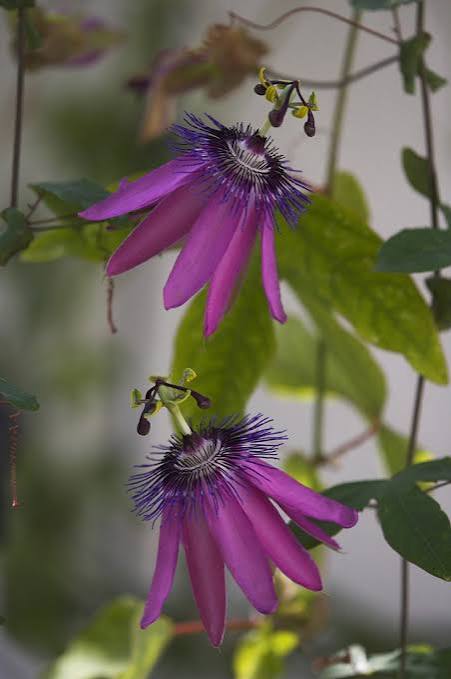
- Colour: Soft purple to purple‑blue tepals with deep violet‑purple filaments and green anthers.
- Size: Around 10 cm across.
- Form: Tepals gradually reflex as they age, giving the flowers a star‑like shape.
- Flowering period:
- Late summer to autumn in most UK gardens.
- In warm regions or under protection, it may flower intermittently year‑round, with peaks in spring and autumn.
- Flowering performance: Mature plants can produce dozens of flowers per day in ideal conditions.
- Pollinator value: Highly attractive to bees, butterflies, and other beneficial insects.
🍃 Foliage
- Type: Evergreen in mild areas; may become semi‑evergreen or deciduous in colder regions.
- Leaves: Deep blue‑green, three‑lobed, glossy, forming a lush backdrop for the flowers.
- Habit: A tendril‑climbing vine that clings without damaging brickwork or fences.
🍈 Fruit
- Appearance: Egg‑shaped orange‑yellow fruits, up to 6 cm long.
- Season: Late summer into autumn.
- Edibility:
- Fruits are edible when fully ripe, though not especially tasty.
- Unripe fruit is toxic; raw plant parts should not be eaten.
📏 Size & Growth
- Height: Typically 4–8 m outdoors.
- Spread: 2.5–4 m.
- Growth rate: Fast; can reach several metres in a few seasons.
- Parentage: A historic UK hybrid between Passiflora kermesina and Passiflora caerulea, giving it improved hardiness and floriferousness.
🌤 Growing Conditions
- Light:
- Full sun for best flowering.
- Tolerates partial shade.
- Aspect: South‑ or west‑facing walls are ideal.
- Soil:
- Moist but well‑drained.
- Suitable for chalk, loam, sand, acidic to alkaline soils.
- Hardiness:
- Rated H3 — hardy in mild UK regions; may need winter protection in colder areas.
- Watering:
- Deep, infrequent watering encourages a strong root system.
- Keep soil slightly drier in winter.
- Feeding:
- Avoid heavy manure or compost — encourages foliage at the expense of flowers.
✂️ Pruning & Maintenance
- Pruning time: Late winter or early spring.
- Method:
- Trim to control size; remove long, straggly shoots.
- Pinch terminal buds to encourage branching.
- Training:
- Allow some stems to hang or droop — these flower more freely.
- Protection:
- In northern regions, provide winter protection or grow against a warm wall.
🌿 Garden Uses
- Climbing over trellises, fences, pergolas, arches
- Exotic accent in courtyard gardens
- Suitable for containers in conservatories or greenhouses
- Excellent for Mediterranean, sub‑tropical, or cottage‑style plantings
- Wildlife‑friendly gardens (bee‑rich flowers)
⭐ Notable Qualities
- RHS Award of Garden Merit winner.
- One of the most floriferous and reliable purple passionflower hybrids.
- Distinctive lavender‑amethyst colour not found in the common P. caerulea.


Reviews
There are no reviews yet.