🌿 Identity & Taxonomy
- Accepted name: Entelea arborescens R.Br.
- Family: Malvaceae (subfamily Grewioideae)
- Common names: Whau, New Zealand mulberry, corkwood, evergreen lime
- Distribution: Endemic to New Zealand—North Island (north of Māhia Peninsula), Three Kings Islands, and the northern tip of the South Island (Golden Bay/Nelson)
- Growth form: Shrub or small tree; the sole species in the genus Entelea
🌳 Habit & Size
- Typically 4–6 m tall, occasionally reaching 8 m in ideal coastal conditions
- Spread: 3–5 m (upright‑oval habit)
- Trunk diameter: Up to 0.25 m
- Branches: Numerous, upright to spreading; young growth densely covered in soft whitish hairs
- Lifespan: Short‑lived, typically <15 years
- Growth rate: Fast, especially on disturbed coastal sites
🍃 Foliage
One of the most distinctive features of Whau.
- Leaf size: Very large—10–25 cm long (sometimes up to 30 cm)
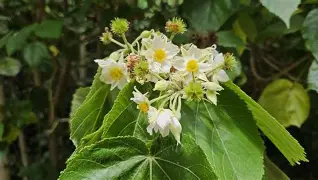
- Shape: Obliquely cordate (heart‑shaped), broad‑ovate, abruptly acuminate; margins doubly crenate‑serrate, sometimes faintly lobed
- Texture: Soft, thin, membranous, wilting readily when picked; often glossy
- Venation: Strongly marked, with 5–7 radiating nerves from the leaf base
- Petioles: Long (8–30 cm), stout, hairy
- Appearance: The huge lime‑like leaves give the tree a tropical look, even in temperate climates
🌸 Flowers
- Season: Early spring to mid‑summer
- Colour: White petals with a central tuft of densely packed yellow stamens
- Size: About 2 cm diameter (petals 10–30 mm long)
- Structure:
- 4–5 sepals, 4–5 petals
- Many stamens, mostly free
- Flowers borne in sub‑umbellate cymes (many‑flowered clusters)
- Scent: Lightly scented
🌰 Fruit & Seeds
One of the most visually distinctive fruits of any New Zealand tree.
- Fruit type: Dry, brown, spiny capsule
- Size: Capsule 1.5–3.5 cm diameter
- Spines: Long, rigid bristles 15–25 mm; black to charcoal coloured when ripe
- Seeds: Numerous, 1.9–2.9 mm long, orange‑yellow to pale brown, granular‑surfaced
- Ecology: Seeds may be fire‑stimulated to germinate
🌱 Wood & Bark
- Wood density: Extremely light—lighter than balsa, and less dense than cork
- Historically used by Māori for fishing floats and rafts due to buoyancy
- Bark: Firm, grey, tearing in long fibrous strips when cut
- Growth rings: Absent; wood contains bands of unlignified parenchyma
🌍 Habitat & Ecology
- Found in coastal to lowland forest, shrubland, cliff faces, slips, dunes, stream margins, and disturbed sites
- Prefers sunny, free‑draining soils, but tolerates semi‑shade and seasonal dampness
- Naturalises easily around settlements and plantings
🌤 Cultivation
- Light: Full sun to partial shade
- Water: Moderate
- Frost tolerance: Low—best in mild coastal climates
- Salt tolerance: Moderate (suitable for coastal gardens)
- Growth rate: Fast
- Use: Excellent for exotic‑looking gardens, coastal plantings, and educational collections due to its unusual wood and spiny fruit.
🏆 Summary
Entelea arborescens is a fast‑growing, tropical‑looking New Zealand tree with enormous soft leaves, abundant white flowers, and dramatic spiny seed capsules. Its incredibly lightweight wood makes it botanically unique, and its bold foliage gives it strong ornamental value in mild climates.
Reviews
There are no reviews yet.